 Skip to content
Ever found yourself stuck in a trade, unsure if you’re getting a fair deal? Maybe you’ve walked away from a pin swap only to realize later that you gave up something rare for a common design. Or perhaps you’re just starting out and have no idea how to tell which pins are worth holding onto. Pin trading is exciting, but without the right knowledge, it’s easy to feel lost. Don’t worry—this guide will walk you through everything from understanding a pin’s value to insider trading strategies that will make you a pro in no time.


Understanding Pin Trading Value (The Collector’s Perspective)
Not all pins are created equal in trading. Experienced traders don’t judge a pin by how cool it looks alone—they judge it by how tradable it is.
A valuable trading pin usually has:
- Clear demand within a specific community
- Good circulation (people recognize and want it)
- The ability to be traded easily, not just displayed
Where and how a pin is traded matters just as much as the pin itself—which is why different pin trading communities operate very differently.
Disney Pin Trading: Rules, Scrappers, and What to Watch Out For
Disney pin trading is its own highly structured ecosystem, with established rules, terminology, and long-standing issues that every collector should understand.
How Disney Pin Trading Works
Most Disney pin trades happen with Cast Members (often called CMs) at Disney parks, resorts, or Disney Springs. Trades are typically one-for-one, and Cast Members are generally required to accept any official Disney pin you offer.
Today, many trades happen via pin boards located behind shop counters, though some Cast Members still wear lanyards.
Scrapper Pins: A Disney-Specific Problem
In Disney pin trading, Scrapper Pins are a well-known and widely discussed issue.
Scrappers are pins that:
- Failed quality control at factories and were meant to be discarded, or
- Were fraudulently produced using stolen pin molds
These pins often end up sold in large, cheap lots online (eBay, Amazon, etc.) and have made Disney pin trading frustrating for many collectors.
Common signs of scrapper pins include:
- Dipped or uneven enamel
- Rough or poorly finished edges
- Incorrect or muddy colors
- Details that look “off” compared to known authentic versions
Although authentic Disney pins usually feature a Mickey-head pattern and a Disney copyright stamp on the back, scrappers often fake these markings. Because of this, experienced traders focus more on overall quality than stamps alone.
Authentic Disney Pins & Special Types
Some Disney pins are especially desirable among collectors, including:
- Artist Proof (AP) pins – produced in very small quantities for internal reference
- Pre-Production (PP) pins – made during early production stages
These pins were never intended for public sale and are considered high-value by collectors.
Where to Get Legitimate Disney Trading Pins
To avoid scrappers, experienced collectors recommend sticking to trusted sources, such as:
- Pinderella Shop
- Buy/Sell/Trade (BST) pin groups on Facebook
- Local BoxLunch locations
- Hot Topic
- Pink a la Mode
- Loungefly
While some brands (like PALM) produce attractive designs, their pins are generally less suitable for Disney pin trading.
For beginners, official starter lanyards and mystery blind boxes are one of the safest ways to build a tradable pin base.
Common Disney Trading Terms
- Fantasy Pins: Fan-designed Disney-themed pins (often found on Etsy). These are not tradable with Cast Members.
- Pinfolios: Display bags designed specifically for storing and carrying pins while trading.

Other Types of Pin Trading: Events, Teams, and Communities
Outside of Disney, pin trading looks very different depending on the event or community.
Olympic Pin Trading
Olympic pin trading is highly social and often informal. A common strategy is buying duplicates—one to keep and one to trade. Many people don’t even realize trading is happening, so approaching others and starting conversations is key.
Collectors should be cautious with online bulk deals that seem too good to be true, as knock-offs are common.
Gaming & Team-Based Pins
At gaming and fan conventions, pins are often obtained through participation—demoing a game, completing a survey, or making a purchase. These pins can run out extremely fast, sometimes within minutes of a booth opening.
In communities like FIRST Robotics, pin culture is more about sharing than strict trading. Teams often leave bowls of pins at their pits or hand them out during conversations. Sometimes, simply asking “Do you guys have any pins?” is enough to receive one.
Collecting & Trading
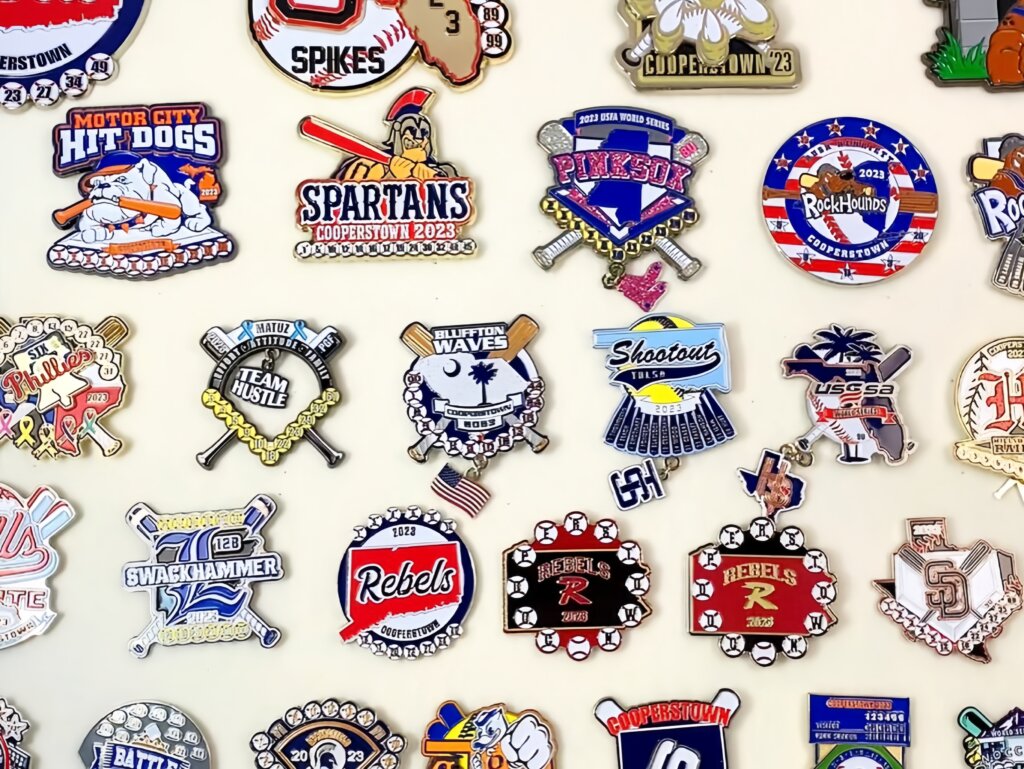
For collectors who love both collecting and trading, one common strategy is buying two sets of a pin you really like—one to keep and one to trade.
Pins tied to popular themes such as Disney, Olympics, and mystery series generally have stronger demand and are easier to trade.
No matter the community, some rules apply everywhere.
Collectors often display pins on lanyards, hats, backpacks, or bags—but experienced traders strongly recommend using locking pin backs to prevent pins from falling off or being lost.
More importantly, pin trading is always about social interaction: talking to people, visiting different pits or booths, and enjoying the hunt for designs that matter to you.
FAQ
Q: How do I know if my pin is rare?
A: Check for limited-edition markings, production numbers, and event exclusivity. Pins made in small quantities are typically more valuable.
Q: Can I trade used pins?
A: Yes, but ensure they are in good condition. Scratched or damaged pins may have lower value.
Q: What’s the best way to store my pin collection?
A: Use pin books, shadow boxes, or display cases to keep them organized and prevent damage.
Conclusion
Trading pins are more than just a hobby—they’re a way to connect with others, celebrate achievements, and build lasting memories. By understanding pin values, practicing smart trading strategies, and following proper etiquette, you can enhance your pin trading experience. Whether you’re just starting or are a seasoned collector, the thrill of the trade never gets old!
For those interested in creating their own custom trading pins, many manufacturers offer customizable options to fit your team’s needs. Search online for “custom trading pins” to explore your choices!

