 Skip to content
Silk screen printing is one of the most commonly used effects in enamel pin production — especially when your design includes details that simply can’t be formed with metal lines and enamel alone.
A very typical example is highlights in illustration.
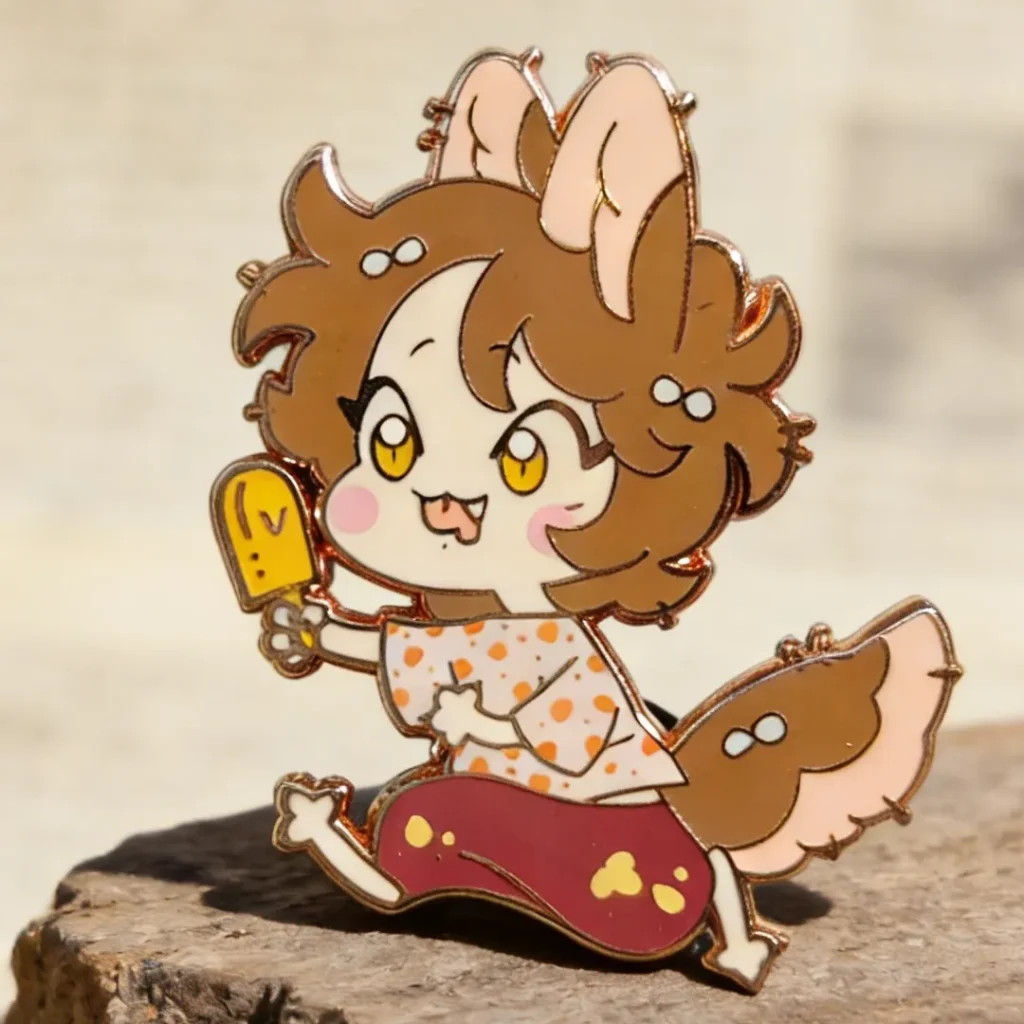
If your original artwork includes small white highlight dots, light reflections in the eyes, soft shadow transitions, or subtle lighting effects on clothing, these details are extremely difficult — or outright impossible — to reproduce using traditional enamel filling. In cases like this, silk screen printing is often the only practical solution that allows those details to survive the pin-making process.
What Is Silk Screen Printing on Enamel Pins?
Silk screen printing is a surface printing process applied to smooth, flat surfaces.
In enamel pin production, it is most commonly used on finished hard enamel pins, but the same effect can also be applied to other flat finishes, such as stained glass–style surfaces. The ink layer is extremely thin and lies completely flat on the surface.
Because of this, silk screen printing blends naturally with the enamel underneath. Even when viewed from the side, it’s very difficult to tell that the printed area and the enamel are two separate layers. Visually and physically, the surface remains smooth and cohesive rather than looking stacked or raised.

This is possible because silk screen ink forms an ultra-thin layer that chemically bonds with the enamel surface after curing. Instead of building up thickness, the ink integrates into the top surface, which is why the final result stays flat, clean, and visually seamless.
Why Some Designs Must Use Silk Screen Printing
If you’ve purchased character pins or illustrated enamel pins before, you may have noticed something interesting:
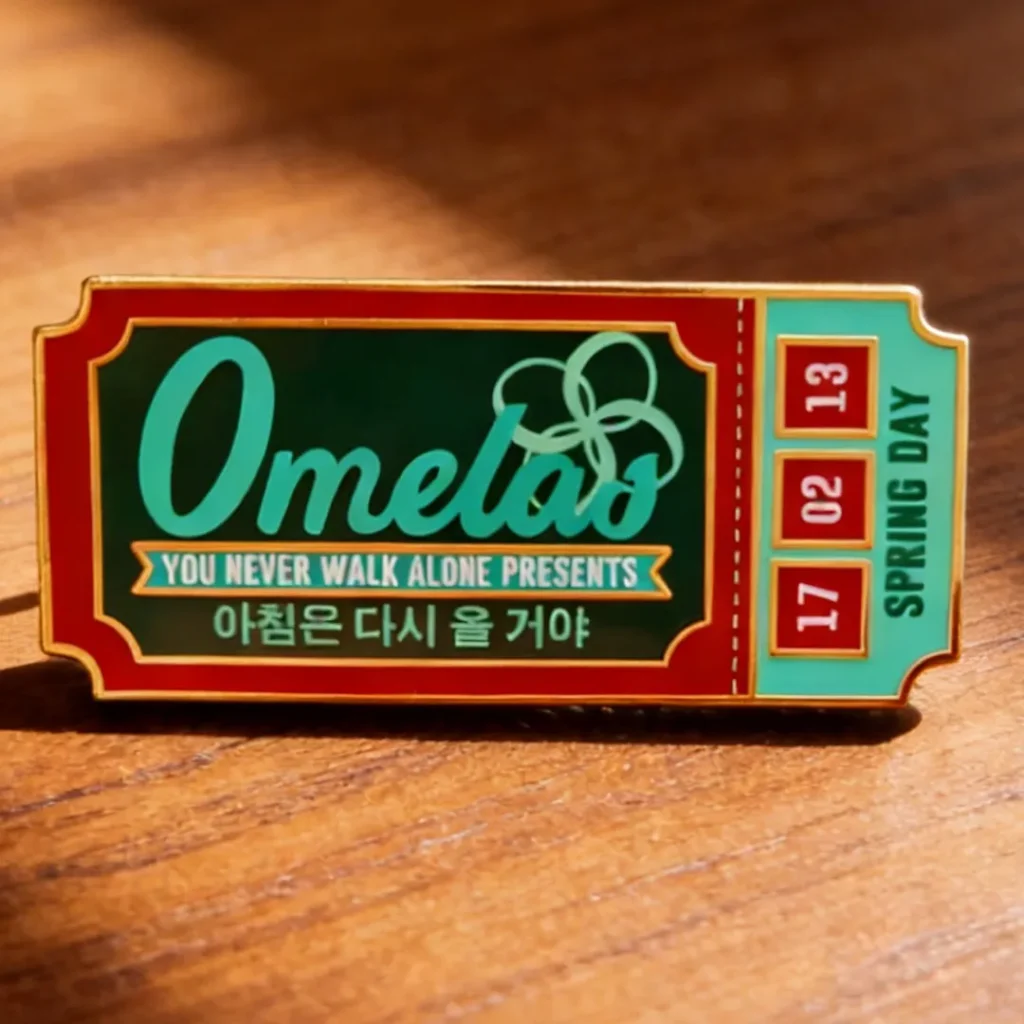
Details like eyes, blush, facial shading, fabric folds, or light-and-shadow separation are often not surrounded by metal lines. That’s because these areas are almost always created using silk screen printing.
In enamel pin production, metal lines have physical limits. The thinnest reliable metal line is typically around 0.2mm, and within one enclosed metal area, only one enamel color can be applied. Enamel is liquid during filling — without a physical boundary, different colors will flow together and cause color bleeding.
This means you cannot realistically apply multiple enamel colors within the same open area unless you are intentionally creating a gradient effect. Extremely complex graphic elements, subtle tonal changes, or painterly lighting simply cannot be achieved through enamel filling alone.
Trying to divide highlights or shadow areas with metal lines usually results in a stiff, unnatural look. Instead of smooth lighting transitions, the design ends up looking cut apart — as if a piece of clothing has been awkwardly sliced into blocks of color. The depth, softness, and original artistic intention are completely lost.
This is exactly why most complex designs rely on silk screen printing. It allows designers to preserve delicate visual information without forcing it into the rigid structure of metal boundaries.

How Silk Screen Printing Is Done in Our Factory
During production, silk screen printing is planned early — even though it’s applied late in the process.
When clients submit their artwork, we confirm which elements require silk screen printing. Experienced designers often provide layered files where silk screen areas are already separated into their own layer. If not, our design team can extract the silk screen elements and prepare a dedicated print layer for approval.
Once the hard enamel pin has completed all base processes — including enamel filling, polishing, and electroplating — we create a custom mesh screen specifically for that design and print layer. Ink is then pressed through the screen onto the finished enamel surface with precise alignment.

This sequence is critical. Silk screen printing must be applied after the enamel surface is fully flat and polished; otherwise, the print quality and durability would be compromised.
Silk Screen Printing Increases Cost and Production Time
Once you understand the process, it becomes clear why silk screen printing affects pricing.
Each silk screen layer requires a custom-made screen, tailored to that specific design — much like a mold is made for a specific pin shape. There is no reuse between different designs.
Additionally, every color requires its own screen. The more silk screen colors you add, the higher the cost becomes. This also extends production time, since printing, curing, and alignment must be handled layer by layer.
In most cases, silk screen printing adds approximately 15 days to the production timeline, depending on color count and scheduling. If your project has a tight deadline, silk screen requirements should be planned in advance.
Common Questions from Our Clients
Can I layer multiple silk screen prints on one pin?
Yes. Adding one or two additional silk screen layers does not affect the overall flatness of a hard enamel pin. However, if a design requires heavy stacking — five layers or more — you may start to notice slight surface unevenness. If absolute flatness is critical, the complexity of the print layers should be carefully considered.
Will silk screen printing scratch or wear off?
Under normal use, silk screen printing is very durable. Even after years of storage, the print remains intact. Damage usually only occurs if strong solvents such as alcohol or oils are used to aggressively rub the surface. For long-term preservation, avoid cleaning printed areas with chemical solvents.
How many silk screen colors can I use in one design?
We typically recommend keeping silk screen colors under five. This offers a good balance between visual detail and cost efficiency. That said, there is technically no hard limit. If you truly want extreme detail, designs with dozens — even 50 or 100 silk screen colors — are possible. Just be prepared for significantly higher unit costs and much longer production timelines.
What’s the difference between silk screen printing and UV printing?
Silk screen printing and UV printing can achieve many similar visual results, but they behave differently on enamel pins. UV printing allows for gradient effects and complex color transitions that silk screen printing cannot produce. However, silk screen printing typically results in a smoother surface finish and finer visual integration with the enamel. Even when two designs look similar at first glance, the visual texture and tactile feel on an enamel pin are not the same.
If you’d like a deeper comparison, our Special Effects Guide explains the differences with real production examples.
Bringing Your Design to Life with Silk Screen Pins
If you’re unsure whether your design truly requires silk screen printing — or whether another effect might be more suitable — our team can review your artwork from a production perspective and help you make the right effect choice before anything goes into manufacturing.
When used correctly, silk screen printing isn’t just an effect. It’s what makes certain enamel pin designs possible at all.
Design Your Silkscreen Pins
Have an idea in mind? Let us turn your pin concept into reality — perfectly sized, beautifully made.

