 Skip to content
Designing a unique custom medal is about much more than choosing a good-looking shape. For sports events—whether it’s a school competition, a city marathon, or a large international tournament—a well-designed medal needs to look good, hold up well, and still make sense in production and budget.
Many event organizers start with a creative idea, but run into problems during production. Sometimes the design is too complex for the material. Sometimes the size makes the cost too high. And in some cases, certain colors just can’t be achieved with the chosen process. Knowing how medals are made early on can save you a lot of trouble later.
1. Choose the Right Material Based on Your Medal Design
When designing custom sports medals, material selection doesn’t need to be complicated. For most projects, the key is simply understanding which material fits your design and budget.
| Feature | Iron / Brass | Zinc Alloy |
|---|---|---|
| Production method | Stamping | Die casting |
| Shape flexibility | Limited | Very high |
| Typical shapes | Round, square | Any shape |
| 3D / Cut-out / Spinning | ❌ Not suitable | ✅ Fully supported |
| Cost level | Iron: lowest Brass: highest | Medium (higher than iron, lower than brass) |
| Best for | Simple, classic medal designs | Unique, creative, and detailed designs |
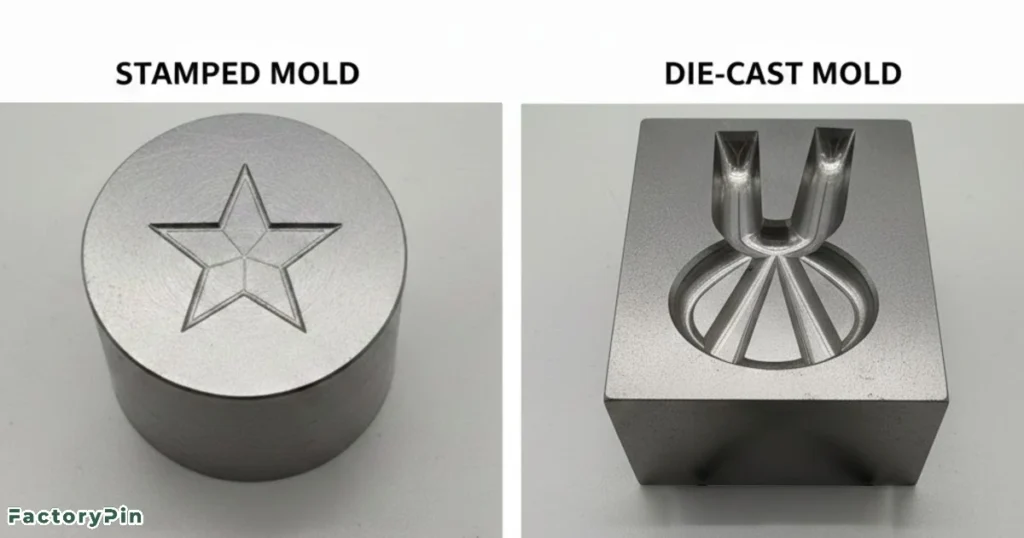
When choosing materials, start with your design complexity, then look at budget.
For simple designs, iron works well for tight budgets. Brass fits better for high-end events that care more about material quality. For creative shapes or special effects, zinc alloy is usually the most practical option.
2. Medal Size
Medal size plays a major role in both appearance and cost. The right size mostly depends on how big your event is.
Recommended Medal Sizes for Sports Events
- Small events (school sports days, class competitions): 4–7cm
- Large events (city tournaments, national or international competitions): 6–10cm
For most sports medals, 7cm is an ideal and highly versatile size. At this size, there’s enough room for 3D details, layers, or cut-out designs, without making it too heavy or too costly.
Oversized medals—such as 9-10cm—may look impressive at first, but they significantly increase material usage, weight, and production cost. Most of the time, it’s better to focus on design quality instead of just going bigger.
3. Production Techniques That Make Custom Medals Stand Out
Most unique custom medals don’t use just one technique. The more eye-catching designs usually mix different techniques to add depth and make the medal feel more dynamic.
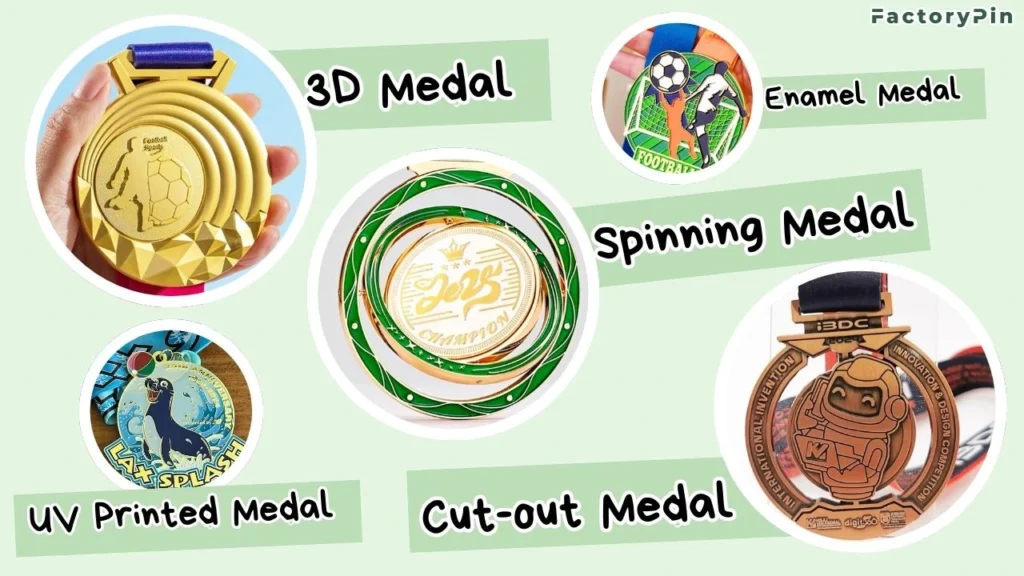
3D, Cut-out, and Spinning Designs
- 3D relief adds depth and a premium feel, making logos or mascots stand out.
- Cut-out designs reduce visual heaviness and add sophistication.
- Spinning elements introduce motion and interactivity, often used in modern sports medals.
These effects do increase the unit price—they often need multiple molds and more complex assembly. As a reference, a single-sided zinc alloy spinning medal (70mm, gold plating) typically costs around USD 7–10 per piece, with a production time of about two weeks. Larger quantities will reduce the unit price.
Enamel vs. UV Printing
Both enamel and UV printing are used to add color to custom medals, but they’re used in different ways.
- Enamel coloring offers a classic, durable finish and works well for solid colors.
- UV printing is essential for designs with gradients, shading, or photographic details, which enamel cannot achieve.
In general, enamel is slightly more expensive than UV printing. If you’d like to understand how different special effects impact the final medal cost, you can refer to our detailed Medal Price Guide for a clearer comparison.
4. Medal Accessories
The ribbon is the most important accessory for a medal, and its proportions directly affect the final presentation.
Common Ribbon Widths and Lengths
Common ribbon widths include 10mm, 13mm, 15mm, 20mm, 25mm, 30mm, and 38mm, with 30mm being the most popular choice.
For length, 900–1000mm is standard. This length allows the medal to be worn comfortably from the back of the neck to the chest. For children’s sports events, 900mm is usually sufficient.
A 70mm medal paired with a 30mm ribbon is widely considered a balanced and visually pleasing combination, though proportions can be adjusted based on design preference.
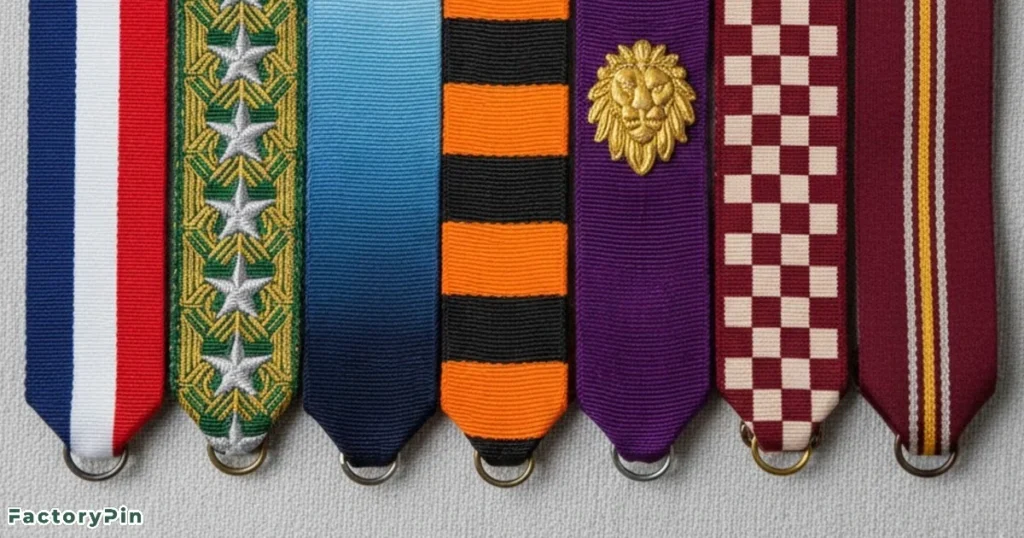
Ribbon Materials and Customization
Common ribbon materials include polyester satin and grosgrain, while large-scale or high-profile events may choose real silk satin for a more premium feel.
Ribbons can be customized with event names, years, logos, or slogans. This helps strengthen your branding and makes the medals more memorable.
Final Thoughts
The best custom sports medals come from balancing creativity with what actually works in production. Think through the material, size, production methods, and accessories, and you’ll end up with a medal that looks unique, feels solid, and stays within budget.
If you’re unsure which material or process best suits your design, you can share your artwork and budget with our team. We can help refine your design, figure out the right production methods, and give you a clear quote—so you know what to expect before production starts.

